
Is there any consumer-facing industry that’s been more disrupted by the internet than travel?
Even older grandparents these days check portals like Expedia and Kayak rather than phoning a trusty travel agent. Meanwhile, their younger kin peruse Instagram for travel inspiration, resorts, and hotels.
But all of them receive email.
Travelzoo, Expedia, and virtually every portal offer ever-increasing options for customizing emails to match their users’ needs.
Airlines send notices of discounted fares, specialty routes, and resort deals. Hotel chains like Starwood, Marriott, and Hilton constantly jockey for attention with offers of extra points and special perks in newsletters they send to guests who’ve opted in.
Travel pubs like Travel + Leisure keep themselves in their readers’ smartphone-laden hands with multiple newsletters tailored to interests such as location guides, travel hacks, and tours.
Even Groupon has a dedicated newsletter that aggregates travel deals with splashy images from its Getaways page.
Playing the email game
“The time for marketers to fully implement email targeting and personalization strategies is now,” travel business website Skift wrote recently while offering a $495 report on how travel businesses can better use email marketing.
Skift, which itself has five niche newsletters to choose from, notes that emails should be tailored to subscribers’ needs, keeping in mind the devices they use. “The traveler may not care exactly how an airline’s or hotel’s message comes to them, only that it does.”
And a new crop of niche newsletters has sprung up for the avid travel deal hunter. Scott’s Cheap Flights heralds its creator’s stated “obsession” of helping people capitalize on airlines’ mistakes (especially for international travel) and other tricks.
AirFareWatchdog competes by encouraging lots of customizations, such as favorite airports, airlines, and destinations.
So, what are the lessons?
There’s plenty for email marketers to learn from travel newsletters that they can apply to their own industries.
Generate incremental revenue
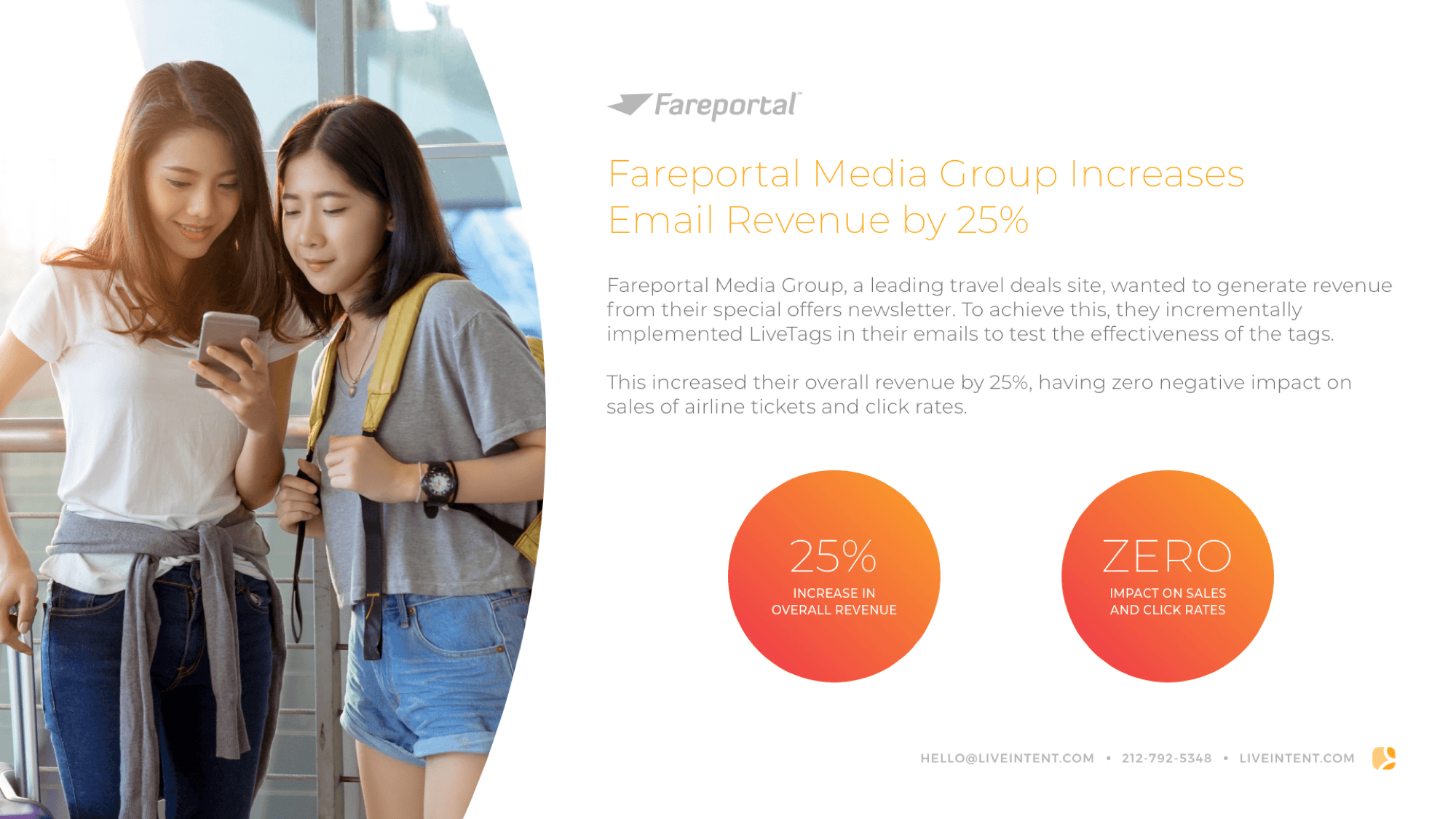
Some travel businesses monetize their newsletters with third-party marketing offers to increase email revenue. For instance, Fareportal, a leading travel deals site, implemented a people-based monetization program. They opened up their email inventory to third-party advertisers which resulted in an overall increase in email revenue with no negative impact on their offers.
Other travel companies include premium levels to their email newsletters as part of their revenue model. They charge for faster or better information, such as more immediate discount alerts or more refined customization. A recent Scott’s newsletter told free subscribers that they “missed out on $676 roundtrip fares to Argentina this week” that premium subscribers had been told about. A customer who is willing to pay for a newsletter that tells them how to spend has indicated real intent.
Charging a fee for premium newsletters or supplementing sales with ad revenue can offset the cost of your email program while also creating perceived value.
Use e-commerce and partnerships
Travel emailers make further bank by selling stuff such as travel books or by linking to booking engines and taking a cut of sales. In turn, some of those partners will link back to a sign-up option for the newsletter.
Pair great content with remarketing technology
Subscribers look forward to receiving and reading travel newsletters that feature great lifestyle content. Some of these focus on stories rather than deals, but leverage dynamic remarketing technology, offering an opportunity to increase conversions. It optimizes the customer’s experience by using interest expressed on the website to automatically personalize marketing offers which promote relevant services/products customers may have once checked out on the site.
Customize!
Newsletter customization takes some work – it’s easier to send one, generic version of an email than tag and parse feeds to put into a template or to even tweak by hand – but once it’s done, a marketer has built-in segmenting.
Not only do consumers avoid inbox overload and email blindness, they also get more of what they want. That, in turn, lets marketers target them more with messages and even start conversations that are more engaging.
Create urgency
A lot of the newsletters tout short-term specials, even flash sales such as Travelzoo’s recent “Suite 16” deals that lasted just 16 hours. What better way to spur higher open rates and inspire clickthroughs than to tell someone they’ve got to act now? The Travelzoo link gives a “sorry you missed it” message, as does a recent one for a Starwood’s “double points” promotion. (Dang, a customer thinks, maybe I’d better try harder next time.)
Managing newsletters – paying close attention, as always, to the data – isn’t rocket science. But the ways in which the travel industry uses it to its advantage can be a lesson to marketers everywhere.
Do more with your email, make it your superpower. Contact us to find out how.
The post How the Travel Industry Approaches Email Marketing (And What We Can Learn) appeared first on LiveIntent Blog.